
Vineyard roller
The two types of roller used in viticulture have two very different roles.
The chopping roller is used to lay down or chop plant cover between rows, and comes in different designs to lay down, pinch or chop grass.
The role of the crumbler roller is to crumble cloddy soil and create fine earth in order to prepare the soil before sowing, planting vines or simply to level out the soil.
The chopping roller is used to lay down or chop plant cover between rows, and comes in different designs to lay down, pinch or chop grass.
The role of the crumbler roller is to crumble cloddy soil and create fine earth in order to prepare the soil before sowing, planting vines or simply to level out the soil.
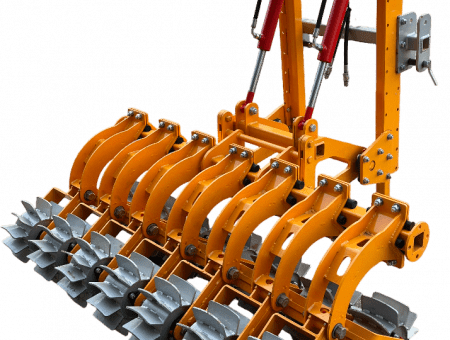
Presentation
The rollers used in viticulture have two very different functions:Crumbling rollers
Widely used in arable farming, they can also be found in vineyards behind a rotary harrow, for example, to prepare the ground for sowing or to finish off the soil before planting. There are different types, each with its own specific features.Chopping rollers
These rollers lay down plant cover and are therefore generally used at the end of winter to lay down or chop (depending on the design) autumn seedlings.To be effective, they need to be fairly heavy, otherwise they can also be reapplied using a hydraulic ram to maintain sufficient pressure on the plant cover (see photo below).
The different chopper rollers
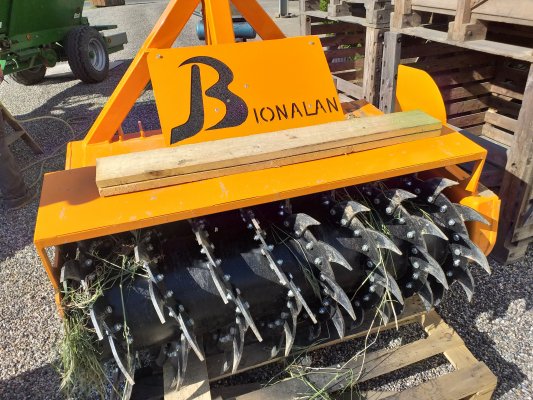
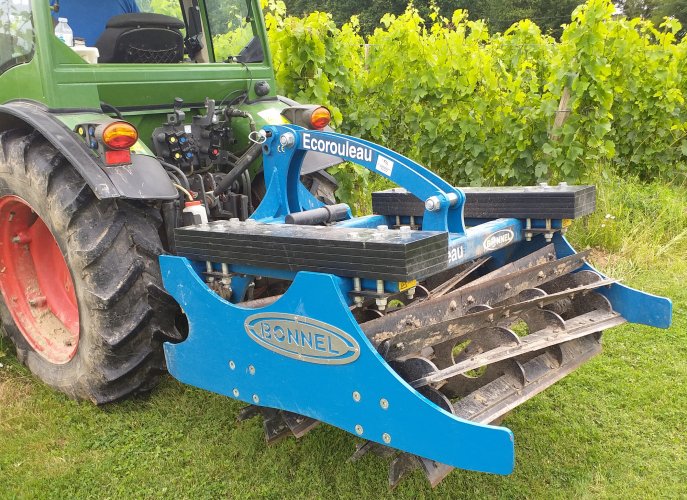 Bonnel chopping roller
- This Bonnel chopping roller makes dense mulch by pinching the hollow stems of plant cover with two rollers fitted with bevelled flat-iron blades. The weight of the tool also ensures good rolling and a mulch that stays firmly on the ground.
- The Roll'N' Orbis roller is equipped with two rows of inclined discs oriented in opposition. The tool glides over the soil to uproot young seedlings and lacerate adult weeds, which will then dry out very quickly. It can be used both on plant cover and on natural weed cover between rows.
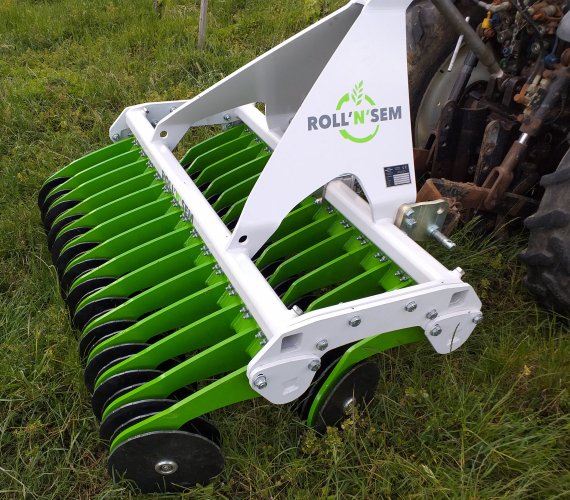 Roll'N'Sem Orbis roller
The different crumbling rollers
The cage roller
The cage roller used in conjunction with a tine tool limits the working depth of the tool it is fitted to.It is made up of metal bars welded to flanges, in line with the axis of rotation of the roller. Its main role is to limit the working depth of the driven tools with which it is often associated. It can also help to compact the soil after grass has been sown.
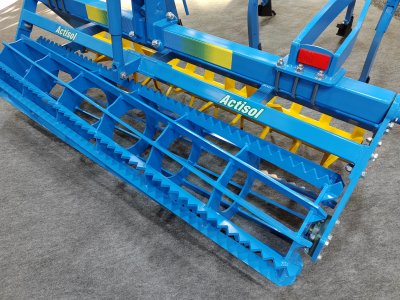
Cage roller
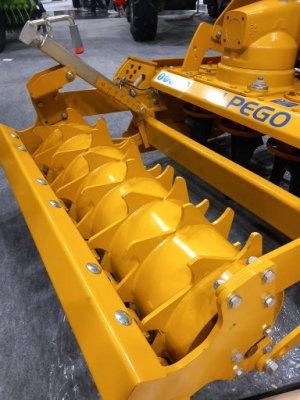
Packer roller
The packer roller
The packer roller is a tool designed to lightly compact the soil surface while crumbling it. It generally consists of a solid, serrated metal roller. The soil must be well prepared beforehand.The Cultipacker roller
The growing interest in grassing techniques has led to the return of wedge ring rollers (packer rollers), which level out the soil and compact it for sowing.Made up of two rows of alternating rollers, formed by the juxtaposition of circular wedge-shaped base elements, it crushes the clods of earth and compacts the soil, creating small furrows. Used in conjunction with a forage seed drill, it can be an excellent piece of equipment for grassing vines, as it is simple, robust and inexpensive.
The pneumatic roller
The pneumatic roller provides excellent consolidation. It is versatile, as it can be used for transport or as a depth control roller. It should not be used on loamy soils with a tendency to threshing.The Cambridge roller
The Cambridge roller is made up of discs of different diameters. The discs are alternately smooth or pointed. The Cambridge roller works in a similar way to the Crosskill roller.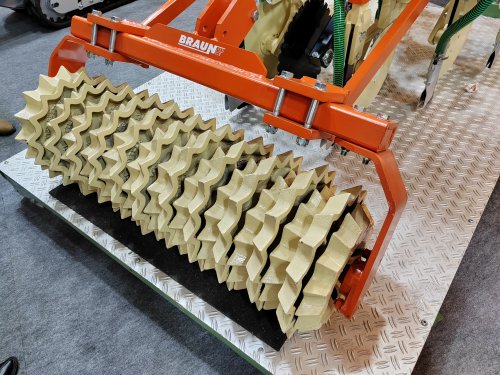
Crosskill roller
The Crosskill roller
Crosskills rollers are made up of metal discs mounted on a shaft. They weigh between 150 and 540 kg per metre of working width. The periphery of these discs is covered with uneven radial and lateral protuberances. Their shape, number and arrangement are variable and depend on the purpose for which they are used. Every other disc is smaller in diameter and rotates at different speeds. The large discs rotate fairly freely around the support shaft and move slightly vertically and longitudinally, which helps to crumble the clods between the discs. They are best used on cloddy soil. They are not recommended for soils that are already well crumbled, as they leave too much fine soil. Crosskill rollers consist of two Crosskill rollers of smaller diameter and weight, assembled on the same frame. This tool is recommended for finishing off seedbed preparation, as at 120 to 270 kg/m they are moderately energetic.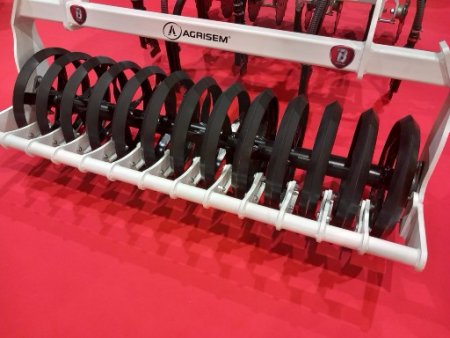
Adjusting and using the roller
Settings
Depending on the design of the tool, there are few or no adjustments.Ground pressure depends on :
- the weight of the tool
- or (at Viti Méca) a load transfer from the tractor using a hydraulic cylinder
Use
The aim of the roller is to :- lay down the grass
- pinch the stems to interrupt the sap supply to the upper aerial part. Vegetation growth is interrupted and the flattened cover acts as a mulch, preventing other grasses from growing.
- it also helps to limit evaporation.
- crumble the clods of earth and leave a smooth surface in which to prepare a seedbed or vine planting.