
Safety equipment and PPE
Wine production exposes workers to specific risks associated with fermentation, confined spaces, chemicals, working at height and working in isolation. Preventing these hazards requires the use of appropriate safety equipment, including gas detection, personal protective equipment (PPE), fall prevention devices, ventilation systems and emergency response resources. The aim is to guarantee the safety of operators while ensuring the continuity of cellar activities.
Context and safety issues in wineries
The activities carried out in a winery expose workers to specific risks linked to:- the wine-making process, particularly alcoholic fermentation (massive release of CO₂)
- work in confined spaces (cellars, vats, pits)
- the use of chemical products (disinfection, treatments, CIP cleaning)
- working at heights (vat rooms, wine-press guards)
- working alone
Prevention is based on a combination of several measures:
- organisational measures
- technical measures
- training workers in the tasks to be performed and the risks associated with these tasks
Regulatory obligations
Employers are required by law to assess and prevent risks that may arise in the course of their work.Gas risks
While carbon dioxide (CO₂) is the best-known gas in viticulture, particularly during alcoholic fermentation, it is not the only potential hazard.Staff can also be exposed to :
- SO₂ (sulphur dioxide): At various stages of the winemaking process
- H₂S (hydrogen sulphide): Resulting from an unstable combination of sulphur and yeast
- CO (carbon monoxide): from poorly ventilated heat engines, boilers or heating equipment
- N2 ( Nitrogen) During inerting operations, this gas can take the place of oxygen.
Carbon dioxide (CO2)
- Produced during fermentation (It is estimated that a litre of wine produces around 50 litres of CO₂ during alcoholic fermentation)
- Odourless, colourless gas
- Heavier than air → accumulation in the lower zone
- Risk: rapid asphyxiation without warning signs
The effects on health
Dramatic accidents have occurred, particularly when opening the cellars, but also when working in or near vats.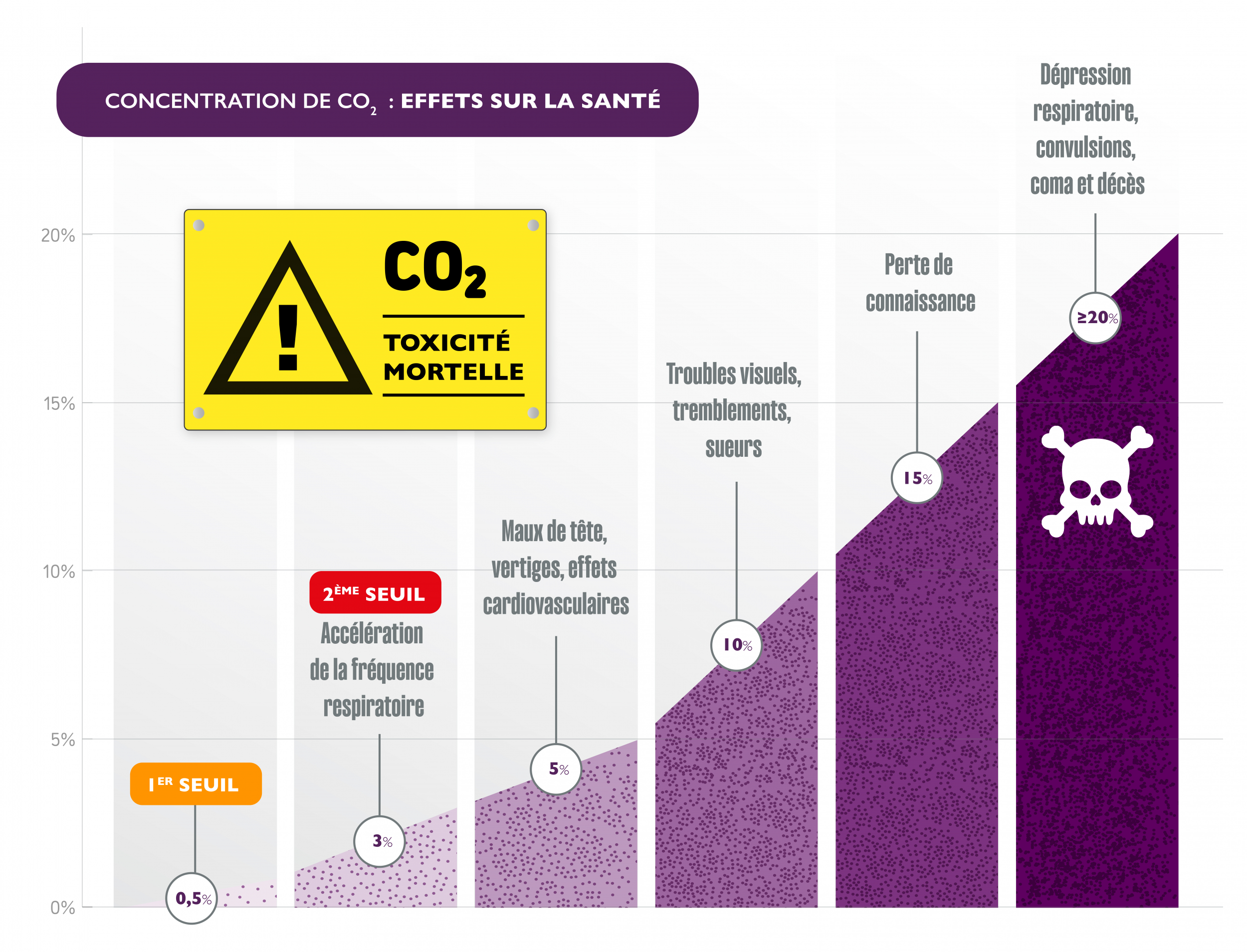
C02 concentration and health effects
Effective prevention: a six-pronged strategy
Capture CO2 at source
Mechanically ventilate premises and tanks
Detect to react in time
Organise work
Prepare emergency servicesTrain, inform, raise awareness
Protection of lone workers (PTI / DATI)
The preventive measures described above can be supplemented by the use of Isolated Worker Alarm Devices (IWADs).Situations concerned
Working alone is not in itself a risky situation.But it can become one if the worker encounters an unusual and dangerous situation without being able to be seen or heard by other colleagues and without being able to be rescued.
Isolation then becomes an aggravating risk factor.Here are a few work situations that can lead to isolated working:
- employee alone and autonomous in a cellar
- cleaning tanks without supervision
- maintenance in an isolated area
- working at night or outside normal working hours
- work at the wine effluent treatment plant
PTI/DATI devices
PTI = Protection for lone workersDATI = lone worker alarm device
Essential functions of these alert systems
- voluntary triggering of an alarm by the isolated person in the event of respiratory distress or a fall
- detection of absence of movement
- detection of loss of verticality (fall)
- locating (GPS or radio) the person in difficulty
- transmission of alerts to a supervision centre or cascade calls to a predefined list of contacts
The equipment comes in the form of a badge, secure smartphone, watch or shoe-mounted box.
This system requires an intervention procedure, people designated to receive alerts and periodic testing of the system.
Exposure to other chemicals
Risks associated with cleaning and disinfection products
In oenology, these are usually risks associated with the use of cleaning or disinfecting products, such as :- caustic soda
- cleaning acids
- disinfectants
- sulphur dioxide solutions
Recommended personal protective equipment
The aim is to protect the whole of the human body when handling these products by means of suitable PPE, i.e. :- type 3 or 4 chemical suit (liquid spray)
- pVC apron
- waterproof clothing
- nitrile, neoprene or butyl gloves
- goggles
- face shield
- non-slip chemical boots
- respiratory protection equipment
Equipment to prevent falls from height
Causes of falls
In a wine storehouse, there is always a risk of falling, and there can be many reasons for this:
- working outside tank railings or gangways
- wet stairs
- working at height on presses
- cleaning at height on ladders or stepladders
Systems to prevent falls from height
There are preventive solutions to prevent falls:
Integrated safety or collective protection (priority)
- safe working platforms or walkways (with railings)
- safe staircases (sufficient incline, steps where the whole foot can be placed, handrails where the hands can be held)
- Light Rolling Platform (LRSP)
Personal protection as a last resort
- harness + lanyards with attachment to a fixed point (= screw-lock karabiner, manucroche, manuclave, etc)
- safety system = fall arrester with automatic return or energy absorber
- certified anchorage points
- workers must never be left alone, so that they can be rescued within a timeframe that is compatible with the protection of their health
- they must be trained in the use of PPE
- pPE has undergone compulsory annual periodic inspection
- a suspension rescue plan has been put in place
- the employer has specified in a manual the anchorage points and mooring devices provided for the use of personal protective equipment and the procedures for its use
Summary of recommendations for winegrowers
By integrating connected gas detection and lone worker protection, winegrowers and winemakers now have a comprehensive approach to safety. This combination makes it easier to anticipate risks, protect teams and ensure the long-term safety of cellar and winery activities.| Prevention | Recommended actions |
| Design of the winery |
|
| Capture and ventilation |
|
| CO2 detection |
|
| Work organisation and training |
|
| Equipment maintenance |
|
Prevention in a company is based on equipment, but also and above all on an effective strategy combining :
- risk assessment
- regular staff training
- appropriate signage
- equipment maintenance
- emergency procedures
- safety culture in operation